Chair Yoga for Seniors: 15 Safe Poses + 4-Week Plan (Beginner-Friendly)


Chair yoga for seniors is a gentle way to move, stretch, and breathe while you stay supported by a sturdy chair. It works well if you want to improve mobility and posture without getting down on the floor. Many older adults also like it because it feels steady and low impact.
In this guide, you will learn simple steps for safe practice, plus clear cues for breathing and alignment. You will also get ready to use routines and a 4 week plan you can follow at your own pace. Chair yoga for seniors can support easier daily movement, like standing up from a seat, reaching overhead, or turning your body with more comfort.
Before you begin, choose a non rolling chair and keep both feet flat on the floor. Move slowly and stop if you feel sharp pain or dizziness. Chair yoga for seniors should feel like a mild stretch and calm effort, not strain.

Table of Contents
Is Chair Yoga Good for Seniors?
Yes, chair yoga for seniors is a smart choice if you want movement that feels steady, gentle, and easy to adjust. A chair gives support, so you can focus on breathing, posture, and slow range of motion. This can make exercise feel safer if you worry about balance or you get tired quickly.
Chair yoga for seniors can help many people, including those who:
- Have limited mobility and want a simple way to move daily
- Feel stiff in the hips, shoulders, or upper back
- Have balance concerns and want extra support while stretching
- Deal with arthritis and need low impact options
- Are coming back after an illness or injury and want a calm restart
You do not need special gear. Chair yoga for seniors works with a sturdy chair, a little open space, and comfortable clothes. If your feet do not reach the floor, place a folded towel or a firm cushion under them, or use a yoga block or a thick book for support. Keep water nearby, and practice where you can hold the chair back if you stand.
What you will need
- A sturdy, non rolling chair on a non slip surface
- Enough space to extend your arms and legs
- Optional props like a towel, pillow, or yoga strap
Who should ask a doctor first
Chair yoga for seniors is usually safe, but it is wise to check with a healthcare provider if you have:
- A recent surgery or a new injury
- Severe osteoporosis or a high fracture risk
- Uncontrolled blood pressure, chest pain, or fainting spells
- Frequent dizziness, balance loss, or numbness and tingling
- A condition where twisting or bending is restricted
Start with short sessions and small movements. Chair yoga for seniors should feel like a mild stretch and light effort, not a hard workout. If you feel sharp pain, spinning, or pressure in your chest, stop and sit tall with slow breathing. When you practice this way, chair yoga for seniors becomes a steady routine you can keep for the long run.
Benefits of Chair Yoga for Seniors
Chair yoga for seniors can support your body in practical ways that matter in daily life. The movements are slow and controlled. That helps you build comfort with motion while staying supported. Many people use chair yoga for seniors to feel looser, steadier, and more relaxed.
Mobility and flexibility for hips, shoulders, and spine
Stiff joints can make simple tasks feel hard. Chair yoga for seniors helps you move key areas with gentle stretches and easy repeats. You work on hip motion, shoulder openness, and spine movement. Over time, this can make it easier to reach a shelf, turn to look behind you, or bend forward to tie shoes.
Balance support and lower fall risk habits
Balance improves when you practice control. Even seated poses train posture, core engagement, and steady breathing. Chair yoga for seniors can also include safe chair supported standing options later on. This steady practice can help you feel more stable when you step, turn, or stand up from a chair.
Posture and core engagement you can feel
Slouched posture can lead to tight shoulders and a tired back. Chair yoga for seniors teaches you to sit tall, stack your ribs over your hips, and lengthen the back of your neck. Small posture resets add up. Many people notice they stand straighter and feel less strain in the upper back after a few weeks of chair yoga for seniors.
Back comfort and gentle strength
A calm mix of spinal movement and light muscle work can support back comfort. Poses like seated cat cow and gentle twists can reduce stiffness. Chair yoga for seniors also builds usable strength with simple holds and controlled transitions. Sit to stand practice later in the guide can help with stairs, getting out of a car, and rising from a couch.
Stress relief through breathing
Breathing is a big part of yoga. Slow nasal breathing can help your nervous system settle. Chair yoga for seniors often ends with calm breathing that lowers tension in the jaw, shoulders, and belly. Many people sleep better when they add a short wind down routine.
Real life wins matter most. Chair yoga for seniors can help you stand up with more ease, reach overhead with less tightness, and turn your body with more comfort. Start small, stay consistent, and let the range of motion grow over time.
Chair Setup and Safety Checklist
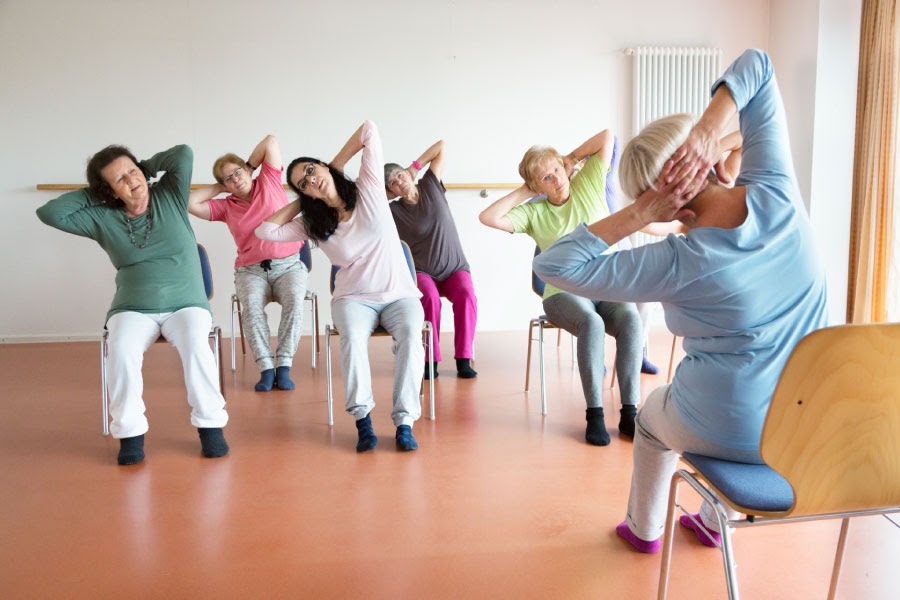
Chair yoga for seniors feels better and safer when your setup is solid. A good chair and a few simple rules can reduce strain and help you move with confidence. Use this checklist before every session of chair yoga for seniors, especially if you are new to it.
Choose the right chair
Pick a chair that feels stable and does not slide.
- Use a sturdy, non rolling chair on a non slip surface
- Choose a seat height that lets your feet rest flat on the floor
- Sit near the front half of the seat so your spine can stay tall
- If the chair has armrests, use them only for light support, not to lean hard
- Keep the chair away from rugs that bunch up or floors that feel slick
Quick chair test
- Push the chair gently from the side. It should not wobble.
- Sit down and shift your weight a little. The chair should not move.
- Place both feet flat. Your knees should feel comfortable, not forced high or low.
A stable chair helps chair yoga for seniors stay smooth and controlled.
Safe form rules
These simple habits make chair yoga for seniors safer for the neck, back, and joints.
- Keep feet flat and hip width apart when you are seated
- Sit tall with a long spine and relaxed shoulders
- Move slowly and match movement with steady breathing
- Use a smaller range of motion if you feel stiff
- Do not force a twist, fold, or stretch to “go further”
A good rule is this: chair yoga for seniors should feel like gentle work and mild stretching, not sharp pain.
Common safety stops
Stop the movement and return to a tall seated position if you notice any of the following:
- Dizziness or a spinning feeling
- Chest pressure or shortness of breath that feels unusual
- Sudden sharp pain in a joint or the back
- Numbness, tingling, or a weak feeling in an arm or leg
If symptoms do not pass quickly, it is best to end the session and get medical advice. Chair yoga for seniors is meant to support comfort, not push through warning signs.
One minute safety check before you start
Use this quick scan to keep chair yoga for seniors steady:
- I have a stable chair and clear space around me
- I can breathe through my nose and relax my shoulders
- I will move slowly and stop if anything feels sharp or wrong
With a safe setup, chair yoga for seniors becomes easier to repeat, and consistency is what brings results.
How Often Should Seniors Do Chair Yoga?
Chair yoga for seniors works best when you keep it consistent and keep it easy. You do not need long sessions to see changes. Short practice done often is usually better than one long session that leaves you sore. Chair yoga for seniors should fit your energy level, your joints, and your weekly routine.
Beginner schedule
If you are new, start small so your body can adapt.
- 2 to 3 days per week
- 8 to 12 minutes per session
- Slow pace and small range of motion
During the first two weeks, focus on learning safe form and breathing. Chair yoga for seniors should feel like light effort and gentle stretching. If you feel tired the next day, shorten the session and keep the moves simpler.
Progression plan
Once the basics feel comfortable, progress in this order:
- Increase time first
Add 2 minutes per session until you reach 12 to 15 minutes. - Then increase range of motion
Move a little deeper only if it stays pain free and steady. - Then add balance challenge
Introduce chair supported standing poses only when seated work feels easy.
This approach keeps chair yoga for seniors safe and repeatable.
Simple progress ladder
Use this as a quick guide.
- Week 1: 8 to 10 minutes, 2 to 3 days
- Week 2: 10 to 12 minutes, 3 days
- Week 3: 12 to 15 minutes, 3 to 4 days
- Week 4: 15 to 20 minutes, 4 days
If you want to do chair yoga for seniors every day, keep it gentle. Alternate a mobility day with a calmer breathing day. A daily session can work well when you keep the intensity low and listen to your body.
A good sign you are on track is steady improvement in comfort. Chair yoga for seniors should make daily tasks feel easier, like standing up, reaching, and turning with less stiffness.
Warm Up 3 Minutes
A short warm up prepares your joints and helps your breathing settle. Chair yoga for seniors feels smoother when you start slowly, even if you only have a few minutes. Do this warm up before the pose list and before any chair supported standing moves.
1) Seated breathing (30 seconds)
- Sit tall near the front half of the chair.
- Place one hand on your belly and one on your chest.
- Inhale through your nose for a slow count of 3.
- Exhale through your nose for a slow count of 4.
- Keep your shoulders soft.
2) Shoulder rolls (30 seconds)
- Lift both shoulders up toward your ears.
- Roll them back and down in a slow circle.
- Repeat 5 times, then reverse the direction for 5.
3) Gentle neck range, optional (30 seconds)
- Keep your chin level, not lifted.
- Turn your head slightly right, then return to center.
- Turn slightly left, then return to center.
- If it feels good, add a small ear to shoulder tilt on each side.
- Skip this if your neck is sensitive.
4) Ankle circles (30 seconds)
- Keep one heel on the floor and lift the front of the foot.
- Circle the ankle 5 times each way.
- Switch sides.
5) Seated march (60 seconds)
- Sit tall with feet flat.
- Lift one knee a few inches, then lower it with control.
- Alternate legs at an easy pace.
- Breathe steadily and keep your ribs stacked over your hips.
This warm up should feel gentle, not tiring. Chair yoga for seniors works best when you stay relaxed and move with control. If anything feels sharp or dizzy, pause and return to calm breathing. Chair yoga for seniors should always start with comfort first.
For more gentle ways to stay active at home, see Chair Exercises for Seniors: 25 Safe Moves + 4-Week Plan (Beginner-Friendly, At-Home), Balance Exercises for Seniors (At-Home, Safe, Step-by-Step + 4-Week Plan), and Senior Fitness Classes: Complete Guide to Safe, Affordable & Effective Programs.
15 Chair Yoga Poses for Seniors Step by Step Plus Modifications
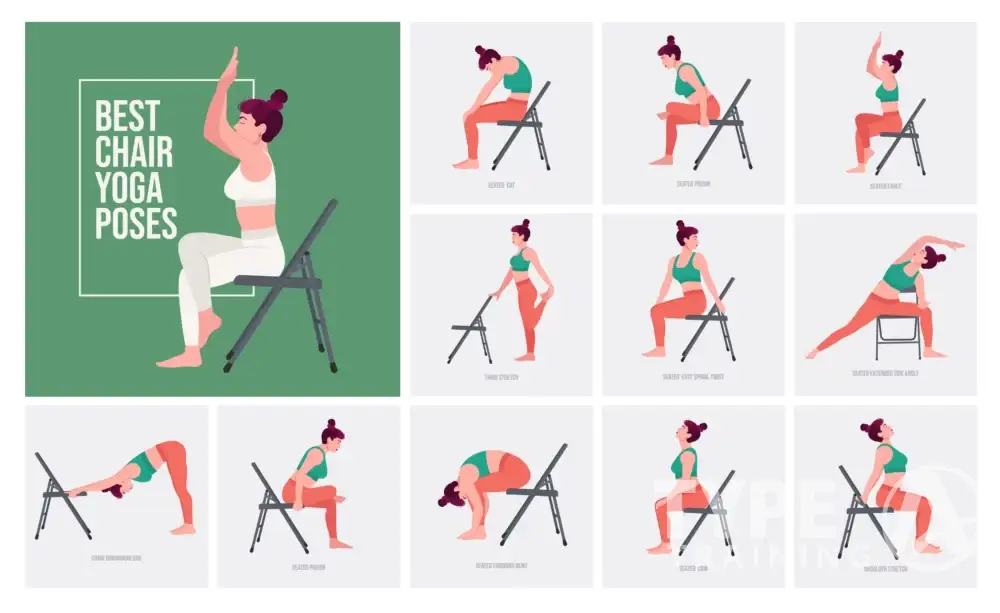
This pose list is the core of chair yoga for seniors. Move slowly. Breathe through your nose if you can. Stop if you feel sharp pain, dizziness, or numbness. Chair yoga for seniors should feel steady and gentle, not forced.

1) Seated Mountain Pose
What it helps: posture and core support
How to do it: Sit near the front of the chair. Place feet flat, hip width. Lengthen your spine. Relax shoulders. Rest hands on thighs. Take 5 slow breaths.
Make it easier: sit back against the chair for support
Avoid if: sitting upright causes pain
Common mistake: chin lifted and ribs flaring
How it should feel: tall and steady, like a posture reset in chair yoga for seniors
2) Seated Side Stretch
What it helps: side body and rib movement
How to do it: Sit tall. Inhale, lift right arm up. Exhale, lean slightly left without collapsing. Keep both hips heavy. Hold 3 breaths. Switch sides.
Make it easier: keep the lifting hand on the head or shoulder
Avoid if: overhead reach hurts the shoulder
Common mistake: leaning forward instead of sideways
How it should feel: mild stretch along the ribs during chair yoga for seniors
3) Seated Cat Cow
What it helps: spine mobility and back comfort
How to do it: Hands on thighs. Inhale, lift chest and tilt pelvis forward a little. Exhale, round the back and tuck the tail slightly. Repeat 6 to 8 slow rounds.
Make it easier: reduce the range, focus on breath
Avoid if: rounding causes sharp back pain
Common mistake: moving the neck too hard
How it should feel: smooth wave through the spine in chair yoga for seniors
4) Seated Gentle Twist
What it helps: spine rotation and posture
How to do it: Sit tall. Place right hand on left thigh, left hand on chair seat or back. Inhale tall. Exhale, turn gently left from the ribs. Hold 2 to 3 breaths. Switch sides.
Make it easier: twist less, keep hands on thighs
Avoid if: twisting is restricted by a medical condition
Common mistake: yanking with the arms
How it should feel: light rotation, not a deep crank in chair yoga for seniors
5) Chair Forward Fold Supported
What it helps: low back release and hamstrings
How to do it: Sit near the front. Feet flat. Inhale tall. Exhale, hinge at hips and slide hands down legs toward shins. Let head relax if comfortable. Hold 3 breaths, then roll up slowly.
Make it easier: fold only a little, hands on thighs
Avoid if: you get dizzy with forward bending
Common mistake: rounding hard through the low back
How it should feel: gentle stretch, calm breath in chair yoga for seniors
6) Eagle Arms
What it helps: upper back and shoulder mobility
How to do it: Sit tall. Reach arms forward. Cross right arm over left. Bend elbows and bring backs of hands together or palms if possible. Lift elbows slightly. Hold 3 to 5 breaths. Switch sides.
Make it easier: hug shoulders instead of binding arms
Avoid if: shoulder pain increases
Common mistake: shrugging shoulders up
How it should feel: stretch between shoulder blades in chair yoga for seniors
7) Seated Figure Four Chair Pigeon
What it helps: hips and glutes
How to do it: Sit tall. Place right ankle on left thigh above the knee. Flex the right foot gently. Stay upright or hinge forward a little. Hold 3 to 5 breaths. Switch sides.
Make it easier: keep the foot lower, closer to the knee
Avoid if: knee pain or hip pinching shows up
Common mistake: letting the top foot go floppy
How it should feel: mild hip stretch, not knee pressure in chair yoga for seniors
8) Seated Hamstring Stretch With Towel Option
What it helps: hamstrings and calf
How to do it: Extend right leg forward with heel down and toes up. Keep spine long. Hinge forward slightly until you feel a stretch. Hold 3 breaths. Use a towel around the foot if needed. Switch sides.
Make it easier: bend the knee a little
Avoid if: sciatic pain increases
Common mistake: rounding the back to reach farther
How it should feel: stretch behind the thigh during chair yoga for seniors
9) Seated Knee to Chest
What it helps: low back comfort and hip mobility
How to do it: Sit tall. Hold behind the right thigh or on the shin. Gently draw the knee toward the chest. Keep shoulders relaxed. Hold 3 breaths. Switch sides.
Make it easier: lift the knee less, hold under the thigh
Avoid if: hip replacement precautions apply
Common mistake: leaning back and collapsing the chest
How it should feel: light hip fold and back ease in chair yoga for seniors
10) Seated Knee Extensions
What it helps: quad strength and knee support
How to do it: Sit tall. Extend the right knee until the leg is straight or close. Hold 2 seconds, then lower slowly. Do 6 to 10 reps. Switch sides.
Make it easier: extend halfway
Avoid if: knee pain spikes
Common mistake: snapping the knee lock
How it should feel: gentle muscle work, steady control in chair yoga for seniors
11) Chair Warrior Two
What it helps: legs, hips, posture, confidence
How to do it: Sit sideways on the chair. Right leg bends with knee over ankle. Left leg extends out to the side, foot flat if possible. Open arms to a T. Gaze over front hand. Hold 3 breaths. Switch sides.
Make it easier: shorten the stance
Avoid if: hip or knee pain increases
Common mistake: front knee caving inward
How it should feel: strong but stable in chair yoga for seniors
12) Chair Reverse Warrior
What it helps: side body and ribs, gentle strength
How to do it: From chair warrior two, keep front knee steady. Slide back hand down the back leg lightly. Reach front arm up and slightly back. Take 2 to 3 slow breaths. Switch sides.
Make it easier: keep torso more upright
Avoid if: overhead reach hurts
Common mistake: collapsing into the low back
How it should feel: stretch along the side without strain in chair yoga for seniors
13) Chair Supported Down Dog
What it helps: shoulders, calves, spine length
How to do it: Stand behind the chair, hands on the chair back. Walk feet back until hips shift back. Keep knees soft. Press hands into chair and lengthen spine. Hold 3 to 5 breaths.
Make it easier: stand closer to the chair
Avoid if: wrist pain or severe dizziness
Common mistake: rounding the back like a hump
How it should feel: long spine, gentle hamstring stretch in chair yoga for seniors
14) Chair Calf Stretch Standing
What it helps: calves and ankle mobility for walking
How to do it: Stand holding the chair back. Step right foot back, heel down. Bend front knee slightly. Keep back leg straight but not locked. Hold 3 breaths. Switch sides.
Make it easier: shorten the step
Avoid if: balance feels unsafe
Common mistake: back heel lifted too high
How it should feel: stretch in the lower leg, steady support in chair yoga for seniors
15) Sit to Stand Plus Seated Relaxation and Box Breathing
What it helps: functional strength and calm breathing
How to do it: Sit near the front. Feet under knees. Lean forward slightly and stand using legs, hands on chair only if needed. Sit down slowly. Do 5 reps. Then sit tall for box breathing: inhale 4, hold 4, exhale 4, hold 4 for 4 rounds.
Make it easier: use hands on chair seat, do fewer reps
Avoid if: standing causes pain or severe dizziness
Common mistake: dropping back into the chair
How it should feel: steady effort, then calm release in chair yoga for seniors
If you want, I can write Section 7 next with the printable routines, keeping the same chair yoga for seniors keyphrase density and avoiding the dash symbol you mentioned.
Printable Chair Yoga Routines Done for You
These routines make chair yoga for seniors easy to follow because you do not have to plan anything. Pick one routine, set a timer, and move at a calm pace. Chair yoga for seniors works best when the session feels doable, even on low energy days. You can copy and paste these routines into a note, then print that note.
8 minute Morning Mobility Routine
Use this when you feel stiff after sleep. Chair yoga for seniors can help you start the day with smoother joints.
Routine
- Seated breathing: 1:00
- Seated Cat Cow: 1:30
- Seated Side Stretch: 1:00 total
- Seated Hamstring Stretch: 2:00 total
- Seated Gentle Twist: 1:30 total
- Seated Relaxation with slow breathing: 1:00
Tip: Keep every move small on day one. Chair yoga for seniors should feel like a warm loosening, not a hard stretch.
12 minute Posture and Back Comfort Routine
Use this when your upper back feels tight or you catch yourself slouching. Chair yoga for seniors often helps posture when you repeat it a few times per week.
Routine
- Seated Mountain Pose: 1:00
- Shoulder rolls: 1:00
- Eagle Arms: 2:00 total
- Seated Cat Cow: 2:00
- Seated Gentle Twist: 2:00 total
- Chair Forward Fold Supported: 2:00
- Seated Relaxation with calm breathing: 2:00
Tip: Sit tall before every pose. That one habit makes chair yoga for seniors more effective.
10 minute Evening Wind Down Routine
Use this to settle your body and quiet your mind before bed. Chair yoga for seniors can feel especially calming when you slow the breath.
Routine
- Seated breathing: 1:30
- Seated Side Stretch: 1:30 total
- Seated Knee to Chest: 2:00 total
- Seated Figure Four Chair Pigeon: 3:00 total
- Box breathing in a tall seat: 2:00
Tip: Keep the lights low and move slowly. Chair yoga for seniors at night should feel soothing and easy.
How to print and use these routines
- Choose one routine for today and circle it on paper.
- Write the times next to each pose and set a timer.
- Repeat the same routine for one week, then try the next one.
If you want, the next section can build a simple 4 week schedule that rotates these routines so chair yoga for seniors becomes a steady habit.
4 Week Chair Yoga Plan for Seniors
This plan makes chair yoga for seniors simple because you follow the same pattern each week. You build comfort first. Then you add time, poses, and a little more challenge only when it feels safe. Chair yoga for seniors should stay steady and manageable, not exhausting.
Week 1 Learn the basics
Goal: learn form, breathing, and safe range
Schedule: 3 days this week
Time: 8 to 10 minutes
Do the 8 minute Morning Mobility Routine on each practice day. If you feel sore, shorten the holds and keep the movements smaller. Chair yoga for seniors in week 1 should feel easy enough that you want to come back tomorrow.
Week 2 Add time and repeat
Goal: build consistency and posture habits
Schedule: 3 days this week
Time: 10 to 12 minutes
Do this rotation:
- Day 1 Morning Mobility Routine
- Day 2 Posture and Back Comfort Routine
- Day 3 Morning Mobility Routine
Keep your pace slow. Chair yoga for seniors improves when you repeat the same moves and notice small changes in how your body feels.
Week 3 Add a little more movement
Goal: increase time and range without forcing
Schedule: 4 days this week
Time: 12 to 15 minutes
Do this rotation:
- Day 1 Posture and Back Comfort Routine
- Day 2 Morning Mobility Routine
- Day 3 Evening Wind Down Routine
- Day 4 Morning Mobility Routine
If standing work feels safe, you can add one chair supported pose at the end, like the chair calf stretch. Chair yoga for seniors in week 3 should still feel controlled and pain free.
Week 4 Build a steady weekly habit
Goal: reach 18 to 20 minutes with calm effort
Schedule: 4 days this week
Time: 18 to 20 minutes
Do this rotation:
- Day 1 Morning Mobility Routine plus one extra pose from the list
- Day 2 Posture and Back Comfort Routine plus sit to stand for 5 reps
- Day 3 Evening Wind Down Routine
- Day 4 Morning Mobility Routine plus chair supported down dog
At this point, chair yoga for seniors can include short standing work if balance feels steady and your chair setup is safe.
How to know you are progressing
You are improving if you notice any of these changes:
- You sit taller with less effort during chair yoga for seniors
- Your joints feel less stiff after a session
- Daily tasks feel easier, like standing up, reaching, or turning
If a week feels too hard, repeat the previous week. Chair yoga for seniors works best when you move forward at your own pace.
Modifications by Common Conditions
Chair yoga for seniors should always match your body on that day. Small changes can make a pose feel safe and comfortable, especially if you deal with joint pain or balance worries. If you have a new diagnosis, recent surgery, or a condition that limits bending or twisting, ask a healthcare provider before you change your routine. Chair yoga for seniors is meant to help you move with less strain, not to push through pain.
Arthritis friendly tweaks
If your joints feel achy or swollen, keep the range small and use more support.
- Move in a smaller range and repeat slowly instead of holding deep stretches
- Use a towel or strap so you do not force your hands to reach
- Keep wrists neutral and avoid long weight on hands during chair supported moves
- Choose seated options on flare up days
Chair yoga for seniors often feels best with gentle motion and steady breathing.
Shoulder pain or rotator cuff sensitivity
Shoulders can get irritated by overhead reaching and strong arm positions.
- Keep elbows bent and hands lower than shoulder height
- Swap overhead side stretch for a lower reach, like hand to head or hand to chest
- In Eagle Arms, use a simple self hug if binding feels sharp
- Avoid end range stretching that causes pinching
Chair yoga for seniors should feel like a mild stretch around the shoulders, not a pinch in the front of the joint.
Knee sensitivity
Knees often feel better when you reduce pressure and avoid deep angles.
- In Figure Four, place the ankle lower or keep both feet on the floor and do a hip opener with a gentle knee drop
- In hamstring stretch, keep a soft bend in the knee
- In sit to stand, use hands for support and do fewer reps
Chair yoga for seniors can still build leg strength without deep bends.
Balance concerns
If you feel unsteady, start with seated work and add standing only when you feel ready.
- Skip standing poses at first and focus on posture and core control
- When you stand, keep both hands on the chair back and widen your stance
- Stand near a wall for extra safety
- If you feel dizzy, sit down right away and breathe slowly
Chair yoga for seniors gets better when you build confidence step by step.
If a change makes a pose feel smoother, keep it. If it increases pain, back off and choose an easier option. Chair yoga for seniors should leave you feeling calmer and more mobile after the session.
Can Chair Yoga Help With Weight Loss?
Chair yoga for seniors can support weight loss, but it works best as part of a bigger weekly routine. On its own, chair yoga is usually a light to moderate activity. It may not burn a large number of calories in a short time. Still, it can help you move more often, sit and stand with more ease, and stay consistent with exercise. That consistency is often the key.
Chair yoga for seniors can also lower stress and improve sleep for some people. When stress is lower and sleep is better, many people find it easier to keep healthy habits. It can also reduce stiffness, which may make walking or strength work feel easier.
A simple best combo plan for seniors
Use this weekly plan for a balanced approach:
- Chair yoga for seniors: 3 to 5 days per week, 8 to 20 minutes
- Easy walking: 3 to 6 days per week, 10 to 30 minutes
- Strength basics: 2 days per week, sit to stand plus wall push ups, 2 sets of 6 to 10
If you want weight loss, pair steady movement with simple food choices you can keep long term.
FAQs
Is chair yoga safe for seniors with limited mobility?
In most cases, chair yoga for seniors is a safe way to move because the chair adds support and reduces the need to balance on one leg. Start with small ranges of motion and a slow pace. If you have a recent surgery, frequent dizziness, or a condition that limits bending or twisting, ask your healthcare provider first. Chair yoga for seniors should feel steady and gentle, not painful.
How long should a chair yoga session be?
A good starting point is 8 to 12 minutes, 2 to 3 times per week. As you feel stronger and looser, you can increase to 15 to 20 minutes. Many people get the best results when chair yoga for seniors stays consistent and realistic, even on busy days.
What is the best chair height for chair yoga?
The best chair height lets you sit with feet flat on the floor and knees in a comfortable angle. Your hips should feel level and supported, not cramped. A sturdy chair that does not roll is ideal. A stable setup makes chair yoga for seniors safer and helps you keep good posture.
Can chair yoga help with balance?
Yes, it can help. Even seated poses train posture, core control, and calm breathing, which all support steadiness. Later, you can add chair supported standing moves if you feel safe. Over time, chair yoga for seniors can build confidence with standing, turning, and stepping.
What if I feel dizzy during chair yoga?
Stop right away and sit tall with both feet on the floor. Breathe slowly and let your body settle. Do not continue that day if dizziness returns. If dizziness happens often, talk with a healthcare provider. Chair yoga for seniors should never include pushing through dizziness or feeling faint.
Bottom Line and Next Step
Chair yoga for seniors is a simple way to move your body with support, even if you have stiffness, low energy, or balance concerns. The safest results come from a steady setup, slow breathing, and small ranges of motion that feel good. Chair yoga for seniors can help you sit taller, loosen tight hips and shoulders, and feel calmer after a short session.
Quick recap
- Use a sturdy chair and keep feet flat on the floor
- Move slowly and stop with sharp pain, dizziness, or numbness
- Practice 2 to 4 days per week, then build time as you feel ready
Try this today
Pick the 8 minute Morning Mobility Routine and do it once. If it feels good, repeat it three times this week. Chair yoga for seniors works best when you make it a habit you can keep.
Next, you can explore related guides like balance exercises, fall prevention routines, gentle stretching, and arthritis friendly movement.
Sources and Review Notes
Chair yoga for seniors is a low impact way to stay active, but safety still matters. For general health guidance, many people follow the physical activity advice from public health and medical organizations. If you have a medical condition, your clinician can help you decide which parts of chair yoga for seniors fit your needs and which moves to avoid.
Sources used for general guidance
- National Center for Complementary and Integrative Health, yoga overview and safety considerations
- Centers for Disease Control and Prevention, older adult physical activity guidance
- National Institute on Aging, exercise and healthy aging guidance
Review notes
- Last reviewed on February 19, 2026
- This guide is for education, not medical advice
- Stop and seek medical help if you have chest pain, severe dizziness, or sudden weakness
If you want to keep progressing, return to the 4 week plan and repeat it with small changes. Chair yoga for seniors improves most when you stay consistent and keep the movements comfortable.
Printable Tracking Sheet and Simple Consistency Tips
A tracking sheet helps you stay consistent because you can see your progress at a glance. Chair yoga for seniors works best when you repeat the basics and build slowly, not when you switch plans every day. Use the simple tracker below to keep chair yoga for seniors easy to follow.
Printable weekly tracker
Write this on paper or copy it into a note, then print it.
Week of: __________
- Day 1 Routine: __________ Minutes: _____ Notes: _____
- Day 2 Routine: __________ Minutes: _____ Notes: _____
- Day 3 Routine: __________ Minutes: _____ Notes: _____
- Day 4 Routine: __________ Minutes: _____ Notes: _____
- Optional Day 5 Routine: __________ Minutes: _____ Notes: _____
How I felt after chair yoga for seniors
- Looser hips: Yes or No
- Easier posture: Yes or No
- Calmer breathing: Yes or No
Two rules that keep it safe
Chair yoga for seniors should stay comfortable and controlled.
- Choose a smaller range if you feel stiff or sore
- Stop if you feel sharp pain, dizziness, or numbness
Easy ways to make it a habit
You do not need motivation every day. You need a simple system.
- Link chair yoga for seniors to a daily cue, like after breakfast or before evening TV
- Keep the chair in the same spot so setup is fast
- Start with 8 minutes and stop there if time is tight
Quick progress check
You are improving if chair yoga for seniors feels smoother and your daily moves feel easier, like standing up, reaching, or turning. If you miss a week, restart with Week 1 of the plan. Chair yoga for seniors rewards consistency more than intensity.
Related Guides to Pair With Chair Yoga
Chair yoga for seniors can feel even better when you combine it with a few simple habits that support strength and balance. You do not need a big workout plan. You just need a steady mix that fits your week. Chair yoga for seniors already builds mobility and calmer breathing, so the best add ons are short and practical.

Here are strong options to pair with chair yoga for seniors:
- Balance training for older adults: simple standing drills near a wall or counter
- Fall prevention routine: foot strength, ankle mobility, and safe turning practice
- Arthritis friendly movement: small range joint circles and gentle strength work
- Low back comfort stretches: hip and hamstring mobility with slow breathing
- Beginner strength at home: sit to stand, wall push ups, and light band pulls
Pick one option and add it twice per week. Keep it easy. That way chair yoga for seniors stays enjoyable and consistent.
Common Mistakes and Simple Fixes
Small form mistakes can make practice feel stiff or irritating. Fixing them often makes progress feel faster. Chair yoga for seniors should feel smooth, steady, and comfortable from start to finish.
Mistake 1: Slouching while you move
Fix: sit near the front of the chair, lift the chest, and relax the shoulders down.
Mistake 2: Holding your breath
Fix: slow the pace and match each movement to an inhale or exhale.
Mistake 3: Forcing a stretch to go deeper
Fix: use a smaller range and stop at mild tension, never sharp pain.
Mistake 4: Using a chair that slides or rolls
Fix: switch to a sturdy chair on a non slip surface.
If you keep these fixes in mind, chair yoga for seniors becomes safer and easier to stick with.
Breathing and Pacing Tips for Better Results
Breathing is the quiet skill that makes everything feel easier. In chair yoga for seniors, good breathing helps you stay relaxed, move with control, and avoid rushing into a stretch.
Use this simple breathing rule
- Inhale as you lift, lengthen, or open the chest
- Exhale as you fold, twist gently, or soften into a stretch
If you forget, that is normal. Just return to a slow exhale and restart the movement. Chair yoga for seniors is not about perfect timing. It is about calm repetition.
Pick a pace you can control
- Move at about half the speed you think you should
- Pause for one breath at the end of a pose
- Do fewer reps if your form starts to slip
How a pose should feel
Chair yoga for seniors should feel like mild stretching, light muscle work, and steady balance. You may feel warmth in the legs during sit to stand, or a gentle pull in the hips during figure four. You should not feel sharp pain, pinching, or numbness.
Quick reset if you feel tense
Sit tall, feet flat, hands on thighs. Take 3 slow breaths. Then continue. Chair yoga for seniors gets better when you stay calm and consistent.
Conclusion
Chair yoga for seniors is a practical way to stay active with less strain. It supports mobility, posture, and calmer breathing while the chair adds steady support. If you practice a few times each week, you can feel real changes in daily life, like standing up more smoothly, reaching with less tightness, and moving with more confidence.
Start with the 8 minute routine, keep the movements gentle, and follow the 4 week plan at your own pace. Chair yoga for seniors works best when you stay consistent, choose a safe chair setup, and stop if anything feels sharp or dizzy.
Discover more options for Senior Care Services
If you enjoyed this guide, you may also like other topics that support daily strength and comfort. Browse Healthy Aging for simple habits that help you feel better over time: https://healthforsenior.com/category/healthy-aging/. For mental sharpness and focus, explore Brain Health & Memory here: https://healthforsenior.com/category/mental-wellness/brain-health-memory/. And if your goal is better balance, flexibility, and safe movement, visit Mobility & Fitness for more routines like chair yoga for seniors: https://healthforsenior.com/category/mobility-fitness/.